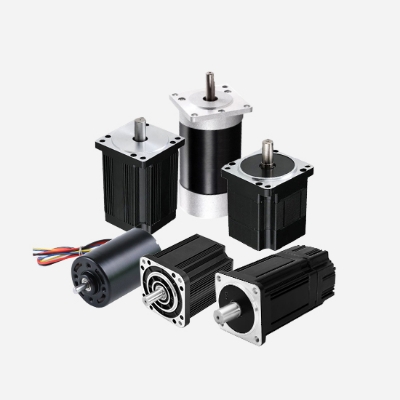
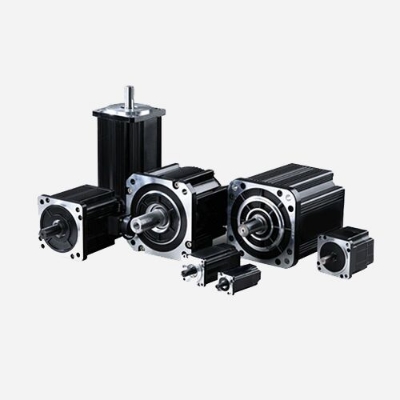
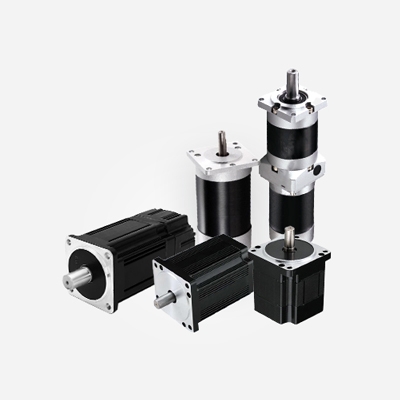
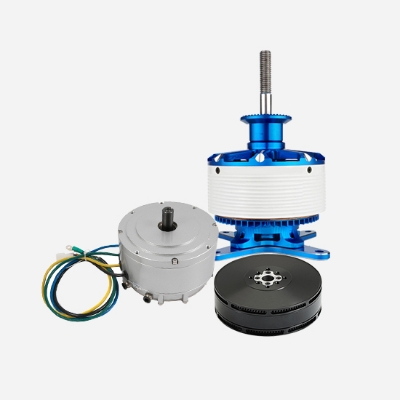
A Brushless Gear Motor describes a complete motor system that combines a brushless DC motor (BLDC motor) with a gearbox. A Planetary Gear Motor refers specifically to a gear motor that uses a planetary gearbox structure, which can be combined with a brushless DC motor to achieve high torque, compact size, and precise motion control.
A brushless DC gear motor combines a brushless DC (BLDC) motor with a gearbox to provide controlled speed and higher torque output. Unlike traditional brushed motors, BLDC motors operate without carbon brushes, reducing friction and mechanical wear.
Robotics technology has rapidly evolved over the past decade, transforming industries such as manufacturing, healthcare, logistics, agriculture, and consumer electronics. Modern robotics demands compact, high-efficiency, long-lasting, and high-precision motion components. From industrial collaborative robots and AGVs to humanoid robots and small service robots, one component has become irreplaceable: BLDC (Brushless DC) motors.
BLDC motors are widely used in robotic systems because of their high efficiency, precise control, compact design, and long operational life. From robotic arms and autonomous mobile robots to drones and medical robots, these motors provide the performance and reliability required in modern automation systems.
This article explores the role of BLDC motors in robotics, their working principles, advantages, applications, and key considerations when selecting the right motor for robotic projects.
Cooling fans are essential components in a wide range of modern devices, from household appliances and computers to industrial machinery, electric vehicles, and renewable energy systems. As electronic systems become more powerful and compact, the demand for efficient, quiet, and durable cooling solutions continues to grow. One of the most important innovations in this field is the Brushless DC (BLDC) motor, which has largely replaced traditional brushed motors in high-performance cooling fans. But why exactly is a BLDC motor used in cooling fans? What makes it superior? This article will discuss these.
This is the core of a gear motor's function. You must differentiate between the motor's innate high speed and the gearbox's output. A "1000 rpm" rating might refer to the motor's no-load speed, but the integrated gearbox reduces this output speed while multiplying torque. For instance, a 3000 rpm motor paired with a 100:1 gearbox yields an output speed of roughly 30 rpm with dramatically increased torque. Carefully examine the rated output torque and rated output speed listed for the gear motor assembly. Ensure the output torque meets or exceeds your load's requirement with a safety margin, and the output speed matches your desired operational pace. So, it’s not about choosing the “highest ratio,” but the right balance for your application.
When selecting a geared motor for industrial equipment, robotics, or automation systems, engineers often compare brushless DC gear motors and brushed gear motors. Both types combine a motor with a gearbox to increase torque and reduce speed, but their internal structures and
performance characteristics are quite different.
In modern electrical and mechanical engineering, motors play a crucial role in powering devices, machines, and systems across industries. Among the many types of motors available today, the Brushless DC (BLDC) motor has gained significant popularity. From household appliances and electric vehicles to industrial automation and aerospace applications, brushless DC motors are increasingly replacing traditional brushed motors and even some types of alternating current (AC) motors. But what makes them so special? Why should engineers, manufacturers, and consumers choose a BLDC motor over other motor types?
Brushless DC (BLDC) motors offer several advantages over traditional brushed DC motors, including higher efficiency, longer lifespan, and greater reliability. However, to operate a BLDC motor, you need a specialized motor controller that provides the necessary electrical signals to control the motor's speed, direction, and torque. Let’s explore how to select a brushless DC motor controller that will meet the needs of your application.
An outrunner brushless motor is a type of permanent magnet synchronous electric motor where the rotor (moving part) is on the outside, surrounding the stationary stator (inner coils). Unlike inrunner motors (with an inner shaft spinning inside a fixed outer case), the outrunner’s outer can rotates while the inner stator stays still. It has no brushes for commutation—instead, it uses electronic speed controllers (ESCs) to power the stator coils and create a
rotating magnetic field, which drives the outer rotor.
Choosing the right waterproof brushless motor is critical for ensuring reliable performance in wet, humid, or harsh environments. Whether your application involves outdoor equipment, marine systems, pumps, robotics, or industrial automation, understanding key selection factors will help you avoid premature failure and optimize efficiency. This guide walks you through the essential considerations when selecting a waterproof BLDC motor.