
Modern robotics is moving toward more compact, lightweight, precise, and highly integrated designs. From industrial robotic arms and collaborative robots to humanoid robots, medical robots, and automated systems, every robotic joint has specific requirements for torque, speed, size, weight, and motion control. As these requirements become more demanding, the motor can no longer be considered an isolated component. It needs to work as part of the complete mechanical and control architecture.
This is where frameless brushless motors provide an important advantage. Unlike conventional housed motors, frameless BLDC motors are designed to be integrated directly into the equipment structure. Their rotor and stator can be incorporated into a custom mechanical assembly, giving engineers greater freedom over housing, bearings, shafts, and installation space. This makes frameless brushless motors particularly suitable for robotic joints and other motion systems where compactness, precision, and mechanical integration are important. Brushless.com currently offers a range of frameless BLDC motors covering different power, voltage, and speed configurations for robotics, industrial automation, medical devices, drones, and other applications.
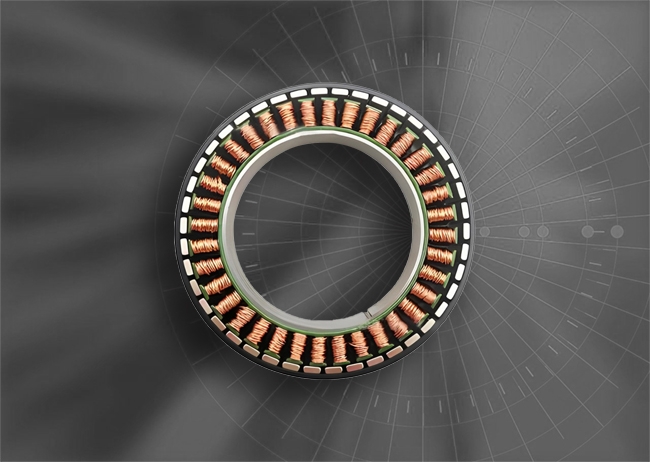
What is a Frameless Brushless Motor?
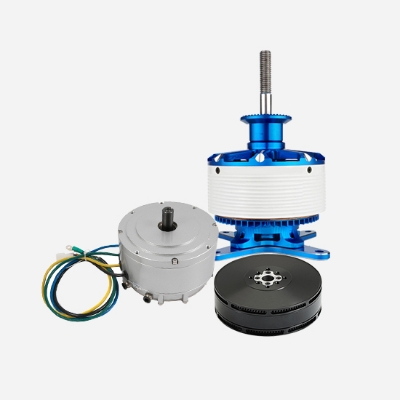
A frameless BLDC motor contains only the essential electromagnetic components:
- Rotor with permanent magnets
- Stator with copper windings
- No housing
- No bearings
- No shaft
Unlike conventional motors that are delivered as complete assemblies, frameless motors are designed to become part of the customer's machine structure. The equipment itself provides the bearing support, housing, cooling arrangement, and mechanical interface.
This design provides engineers with significantly greater freedom in mechanical integration. For example, in a robotic joint, the rotor can be mounted directly onto the rotating arm while the stator is fixed inside the joint structure. This eliminates unnecessary components, reduces weight, and improves torque density.
Frameless Brushless Motor vs. Brushless Motor
SISCO frameless brushless motor is a type of BLDC motor designed without a complete housing, shaft, and bearing assembly. It typically consists of a rotor and stator that can be integrated directly into the machine's mechanical structure. This design provides greater flexibility for customized applications, especially where space, weight, and precise mechanical integration are important.
A standard brushless motor, on the other hand, is usually supplied as a complete motor assembly with a housing, shaft, bearings, and mounting structure. It is easier to install and is suitable for general-purpose applications where a ready-to-use motor is preferred.
The main difference is therefore integration and flexibility. Frameless brushless motors are well suited to robotic joints, precision actuators, medical equipment, and other compact motion systems that require customized mechanical structures, while conventional brushless motors are more convenient for standard applications with simpler installation requirements.
Why Do Robots Need Highly Integrated Motors?
A robotic system may contain multiple moving joints, and each joint has its own requirements for torque, speed, acceleration, position control, and available installation space.
Consider a multi-axis robotic arm. A conventional motor may require:
Motor → Mounting Structure → Coupling → Gearbox → Joint
Each additional component increases the size and mechanical complexity of the joint.
A frameless BLDC motor can instead be incorporated directly into the joint structure:
Stator → Custom Housing → Rotor → Joint Mechanism
The robot manufacturer can design the housing, bearing arrangement, shaft, and transmission around the motor rather than designing the robot around a preassembled motor.
This makes the motor particularly useful when:
- Installation space is limited
- The robot requires compact joints
- Low weight is important
- Direct-drive operation is desirable
- Custom mechanical integration is required
- Precise rotational control is needed
Brushless.com's frameless motor range is specifically designed for applications where space, weight, and precision are important, including robotics and industrial automation.
Why Are Frameless Brushless Motors Suitable for Robotics?
Robotic systems often have limited internal space and strict weight requirements. At the same time, their motors need to provide controlled and repeatable movement.
Frameless BLDC motors address these requirements through a combination of:
- Compact mechanical integration
- Flexible installation
- Brushless operation
- Precise electronic control
- Low-speed configurations
- Direct-drive potential
- Customizable mechanical structures
- Different power and speed options
The advantage is therefore not only the brushless motor itself. The major benefit comes from combining BLDC performance with a flexible frameless mechanical structure.
Frameless Brushless Motor Applications in Robotics
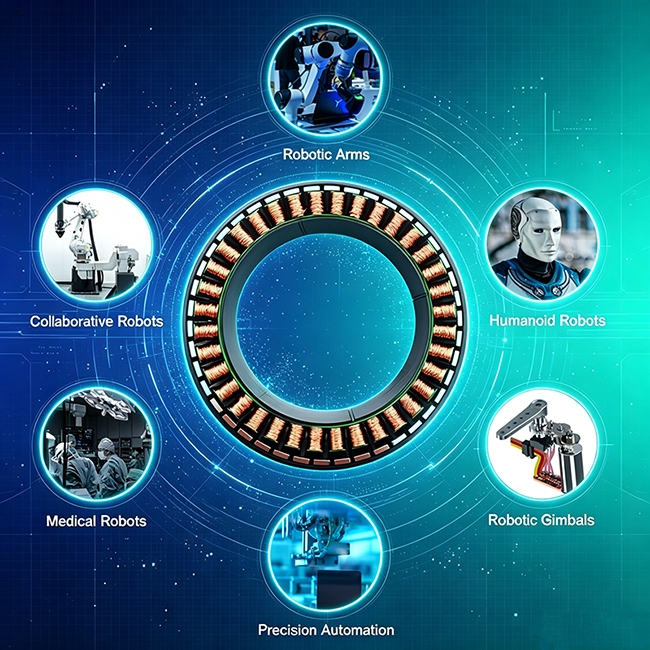
Frameless BLDC motors can be used in many types of robotic and automated equipment.
Robotic Arms
Robotic arms contain multiple rotary joints, each with different torque and speed requirements. A frameless motor can be integrated into the joint structure to create a compact actuator.
Potential benefits include:
- Compact joint design
- Flexible mounting
- Precise rotational control
- Direct-drive potential
- Customized mechanical interfaces
This makes frameless motors suitable for various industrial robotic arm designs.
Collaborative Robots
Collaborative robots are designed to work in environments where humans and robots share workspace. Their joints need controlled and predictable movement while maintaining a compact mechanical structure. Frameless motors can be integrated into the joints to help manufacturers develop compact actuator assemblies.
The actual suitability depends on the robot's required torque, speed, feedback, safety architecture, and mechanical design.
Humanoid Robots
Humanoid robots may contain a large number of moving joints.
These include:
- Shoulder joints
- Elbow joints
- Wrist joints
- Hip joints
- Knee joints
- Ankle joints
Because each joint has limited installation space, motor integration becomes particularly important. A frameless motor allows the mechanical structure of the joint to be designed around the motor rather than around a complete motor housing.
This makes frameless BLDC technology an interesting option for compact humanoid actuator designs.
Medical Robots
Medical robotics requires accurate and controlled movement. Potential applications include:
- Surgical robots
- Rehabilitation systems
- Robotic prosthetics
- Laboratory automation
- Medical positioning systems
Frameless BLDC motors can be integrated into specialized mechanisms where compact dimensions and controlled movement are important. Brushless.com's frameless motor products identify medical devices among their application areas.
Precision Automation
Robotic motion is not limited to robot arms. Frameless motors can also be considered for:
- Precision positioning systems
- Inspection equipment
- Automated machinery
- CNC-related mechanisms
- Optical equipment
- Laboratory automation
These systems often require repeatable motion and careful control of speed and position.
Robotic Gimbals
Gimbals require controlled rotation around one or more axes. Compact low-speed frameless motors can be useful for applications where the motor must be integrated into a limited space while providing controlled movement.
Brushless.com's 40W 24V 100 rpm frameless motor, for example, is listed for applications including UAV gimbals and precision tools.
Conclusion
Frameless brushless motors provide robotics engineers with more than a compact BLDC motor. They provide a flexible foundation for designing the complete robotic motion system. By separating the motor's electromagnetic components from a conventional housing, frameless BLDC motors allow the rotor and stator to become part of the robotic joint itself. Engineers can design the surrounding housing, bearings, shaft, encoder, and cooling structure according to the requirements of the machine.
This makes frameless motors particularly useful for robotic arms, collaborative robots, humanoid robots, medical robots, precision actuators, gimbals, and industrial automation systems. Their combination of compact integration, flexible mechanical design, brushless operation, precise electronic control, and direct-drive potential makes them an important option for modern robotic motion systems.
Brushless.com's frameless brushless motor range includes configurations from compact low-power models to higher-power motors, with different voltage and speed options available for applications where space, weight, and controlled motion are important.
