
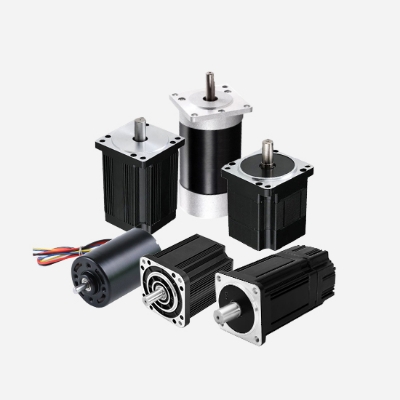
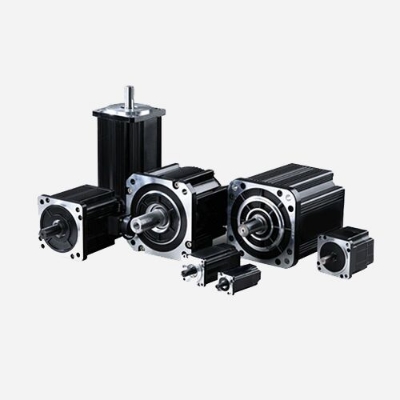
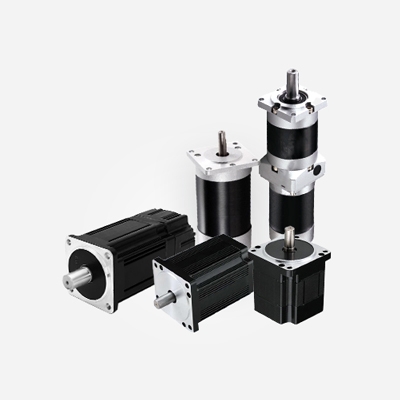
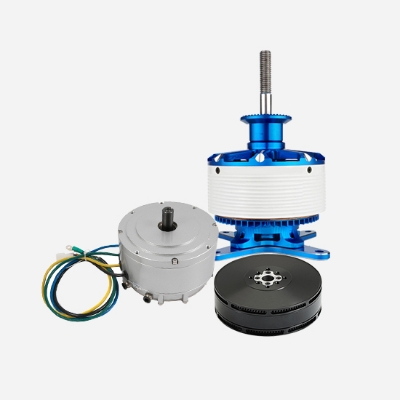
Brushless DC (BLDC) motors offer several advantages over traditional brushed DC motors, including higher efficiency, longer lifespan, and greater reliability. However, to operate a BLDC motor, you need a specialized motor controller that provides the necessary electrical signals to control the motor's speed, direction, and torque. Let’s explore how to select a brushless DC motor controller that will meet the needs of your application.
Selecting the right controller is one of the most critical steps in designing a reliable and efficient Brushless DC motor system. While many users focus primarily on motor specifications such as torque and speed, the controller is actually the “brain” of the system. A mismatch between the motor and controller can lead to overheating, unstable performance, poor efficiency, or even permanent damage.
This comprehensive guide explains how to properly select a BLDC motor controller based on voltage, current, control strategy, protection features, communication interface, and application requirements.
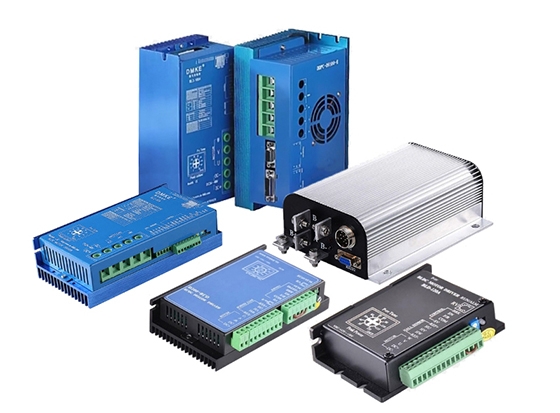
Understand the Role of a BLDC Motor Controller
Unlike brushed motors, BLDC motors do not use mechanical brushes for commutation. Instead, they rely on electronic switching controlled by a motor controller.
A BLDC controller performs several key functions:
- Converts DC power into three-phase AC signals
- Controls motor speed using PWM (Pulse Width Modulation)
- Regulates torque output
- Detects rotor position (via sensors or back-EMF)
- Protects the system from electrical faults
Without a properly selected controller, even a high-quality motor cannot perform optimally.
Determine Continuous and Peak Current Requirements
Current capacity determines torque capability.
You must evaluate:
Continuous Current
The current the controller can provide for long-term operation.
Peak Current
Short-duration current during acceleration or sudden load increases.
If your application involves:
-
Frequent start-stop cycles
-
Heavy load acceleration
-
High torque demand
Then peak current capacity becomes critical.
Selection Tip:
Controller continuous current ≥ motor rated current
Controller peak current ≥ 1.5–2× rated motor current (depending on application)
Undersized controllers may cause:
-
Overheating
-
Overcurrent protection triggering
-
Reduced system lifespan
Choose the Correct Control Method
There are two main control strategies in BLDC systems:
Trapezoidal Control
-
Simpler algorithm
-
Lower cost
-
Suitable for fans, pumps, basic EVs
Advantages:
-
Cost-effective
-
Easy implementation
Limitations:
-
Slight torque ripple
-
Higher noise at low speed
FOC (Field-Oriented Control)
-
Advanced vector control method
-
Smooth torque output
-
Lower noise
-
Higher efficiency
-
Better dynamic response
FOC is recommended for:
-
Electric vehicles
-
Robotics
-
Medical equipment
-
Precision automation systems
If your application requires smooth low-speed operation and precise torque control, FOC is the better choice.
Match the Voltage Rating Carefully
The first and most important parameter is voltage compatibility.
Common system voltages include:
Key Rule:
The controller’s operating voltage range must include:
-
Nominal battery voltage
-
Fully charged battery voltage
-
Possible voltage fluctuations
For example:
A 48V lithium battery may reach 54.6V when fully charged. Selecting a controller rated exactly at 48V without considering peak voltage can cause overvoltage shutdown or damage.
Decide Between Sensor and Sensorless Controllers
BLDC controllers can be categorized as:
Hall Sensor Controllers
-
Use built-in Hall sensors
-
Reliable starting performance
-
Stable low-speed control
Recommended for:
-
EV systems
-
AGVs
-
Industrial automation
Sensorless Controllers
-
Use back-EMF detection
-
Fewer wires
-
Lower cost
Recommended for:
-
High-speed fans
-
Drones
-
Simple pump systems
If strong starting torque and stable low-speed performance are required, choose sensor-based control.
Evaluate Protection Features
Protection functions are critical in industrial applications.
A high-quality BLDC controller should include:
-
Overcurrent protection
-
Overvoltage protection
-
Undervoltage protection
-
Overtemperature protection
-
Short-circuit protection
-
Stall protection
These protections prevent catastrophic failures and improve reliability.
For outdoor or heavy-duty systems, robust protection is non-negotiable.
Consider Communication and Control Interface
Modern BLDC controllers often support multiple control methods:
-
PWM input
-
0–5V / 0–10V analog control
-
RS485
-
CAN Bus
-
UART
If your system integrates with PLCs, robotic controllers, or vehicle control units, communication compatibility is essential.
For industrial automation, CAN Bus or RS485 is typically preferred.
Evaluate Thermal Management and Cooling
Controllers generate heat due to MOSFET switching and current flow.
Check the following:
-
Heat sink size
-
Cooling type (natural air / forced air)
-
Ambient temperature rating
-
Installation space
High current controllers require proper airflow and mounting surface contact.
Poor thermal design may cause:
-
Thermal shutdown
-
Reduced lifespan
-
Efficiency loss
Consider Environmental Requirements
In harsh environments, evaluate:
-
IP rating
-
Dust and moisture protection
-
Vibration resistance
-
Corrosion resistance
Outdoor EV or industrial systems require higher environmental durability.
Conclusion
Choosing the right controller for your Brushless DC motor system requires more than matching voltage and current ratings. Whether your application is electric vehicles, robotics, drones, or industrial automation, taking time to evaluate technical requirements will prevent costly failures and optimize overall system performance.
If you are looking for reliable and high-efficiency BLDC motor controllers, visit Brushless.com to explore professional solutions tailored for EV, robotics, drone, and industrial automation applications.
