
Drones have rapidly evolved from hobby gadgets to essential tools used in filmmaking, mapping, agriculture, inspection, racing, and even delivery. Behind every stable hover and powerful lift-off is a motor system designed for efficiency and reliability. Among the different types of motors, outrunner brushless motors have become the top choice for most multirotor drones.
But what exactly is an outrunner brushless motor—and why is it so widely used in drone engineering? This guide breaks it all down in simple, clear terms.
What Is an Outrunner Brushless Motor?
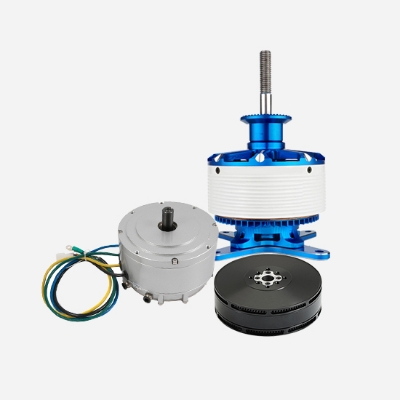
An outrunner brushless motor is a type of permanent magnet synchronous electric motor where the rotor (moving part) is on the outside, surrounding the stationary stator (inner coils). Unlike inrunner motors (with an inner shaft spinning inside a fixed outer case), the outrunner’s outer can rotates while the inner stator stays still. It has no brushes for commutation—instead, it uses electronic speed controllers (ESCs) to power the stator coils and create a rotating magnetic field, which drives the outer rotor.
Outrunners are known for:
- High torque at low RPM
- High efficiency
- Long lifespan (no brush wear)
- Compact, rugged design
Here’s the schematic diagram of an outrunner brushless motor:
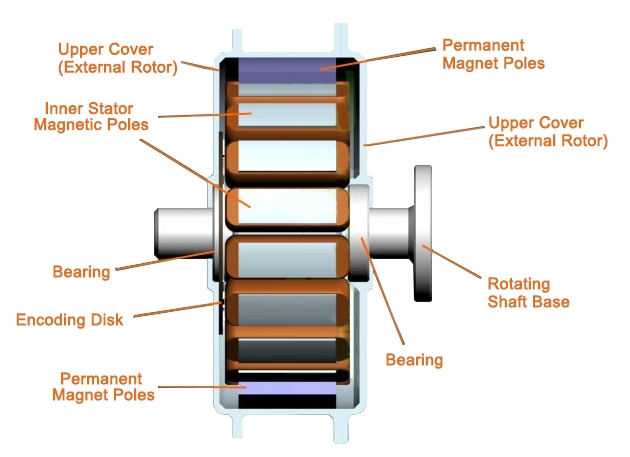
- Fixed Central Shaft: The entire stator is mounted on this shaft and does not rotate.
- Stationary Inner Stator & Three-Phase Windings: Generates a rotating magnetic field when energized.
- Air Gap: A small clearance between the stator and rotor that allows the rotor to spin smoothly.
- Permanent Magnets (N/S Poles Alternating): Mounted on the inner surface of the outer rotor.
- Rotating Outer Can Rotor: The outer shell that rotates around the stator.
- Bearings: Reduce friction on the rotating shaft.
- End Covers / Housing: Structural parts that enclose and protect the motor.
How Does an Outrunner Brushless Motor Work?
An outrunner brushless motor operates by using electromagnetic fields to create rotation, but with a unique design: the outer shell (rotor) spins while the inner core (stator) remains fixed. Here's how the process works step by step:
1. The Stator Creates a Rotating Magnetic Field
Inside the motor, the stator contains three-phase copper windings. When the ESC (Electronic Speed Controller) supplies current to these windings in a precise
sequence, it produces a rotating magnetic field.
2. Permanent Magnets on the Rotor Follow the Magnetic Field
The outer rotor “can” is lined with permanent magnets arranged in alternating north and south poles. As the stator’s magnetic field rotates, these magnets are pulled along with it.
3. The Rotor Spins Around the Fixed Stator
Because the magnets are attached to the outer shell, the entire outer housing rotates. This is why it’s called an outrunner—the outside runs around the inside.
4. The Rotational Motion Drives the Propeller or Output Shaft
The rotating can turns the motor shaft, producing torque. Outrunner motors naturally generate high torque at lower RPM, making them ideal for drones, RC planes, and robotics.
5. Bearings Ensure Smooth, Low-Friction Rotation
Bearings support the rotating rotor, allowing it to spin freely with minimal resistance.
6. Airflow Provides Natural Cooling
Because the outer can spins, it creates airflow that helps cool the motor — improving efficiency and preventing overheating.
Key Features of Outrunner Brushless Motors
Here are the standout characteristics that make outrunners unique:
- High Torque Output: The larger rotating mass gives outrunners higher torque at lower RPMs.This allows drones to spin large propellers without needing a gearbox.
- Efficient Cooling: The motor’s exposed spinning design increases airflow naturally, helping with heat dissipation.
- Compact and Lightweight: Outrunners often pack more torque into a smaller, lighter package—perfect for flight applications.
- Smooth Performance: With fewer moving parts and no brushes, the motor runs quietly, smoothly, and with minimal maintenance.
Why Outrunner Brushless Motors Are Popular in Drones?
1. Ideal Torque for Large Propellers
Multirotor drones rely on wide propellers to generate lift. Outrunner motors deliver the torque needed to spin these propellers efficiently without sacrificing size or weight.
2. Excellent Weight-to-Power Ratio
Drones need maximum thrust with minimal mass. Outrunner BLDC motors are lightweight but deliver impressive power, directly improving:
- Flight time
- Payload capacity
- Climbing ability
- Stability during hover
3. High Efficiency Means Longer Flight Times
Since drones are battery-powered, every watt counts. Outrunner motors are highly efficient, reducing energy waste and extending flight duration.
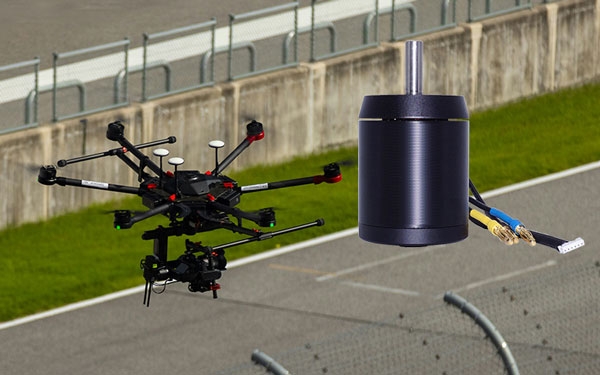
4. Better Cooling for Demanding Flights
The rotating bell provides natural airflow around the motor—helpful during:
- High-thrust maneuvers
- Long flights
- Hot weather operations
- Efficient cooling reduces the likelihood of overheating and motor failure.
5. Reliability and Low Maintenance
Without brushes that wear out, outrunner brushless motors:
- Last longer
- Require minimal service
- Provide consistent performance
This is invaluable for professionals who rely on drones for commercial work.
6. Wide Availability and Affordability
Since outrunners are the standard for drone propulsion, the market offers thousands of models with different:
- KV ratings
- Size classes
- Power levels
This makes upgrades, repairs, and replacements easy and cost-effective.
Applications of Outrunner Brushless Motors in Drones
Outrunner motors are used across almost all multirotor categories:
- Cinematic drones (DJI-style)
- FPV freestyle drones
- Racing drones
- Agricultural drones
- Industrial inspection drones
- Delivery drones
- DIY and hobby builds
Their versatility makes them the default choice for most modern drone designs.
Conclusion
Outrunner brushless motors have become the backbone of modern drone technology. Their high torque, efficiency, strong cooling ability, and lightweight design make them ideal for spinning large propellers and maintaining stable flight.
Whether you're a drone builder, engineer, or hobbyist, understanding outrunner motors is essential for selecting the right propulsion system and optimizing performance — and at the Brushless Motors Store Online, you can also find a wide range of high-quality brushless motors to choose from.
